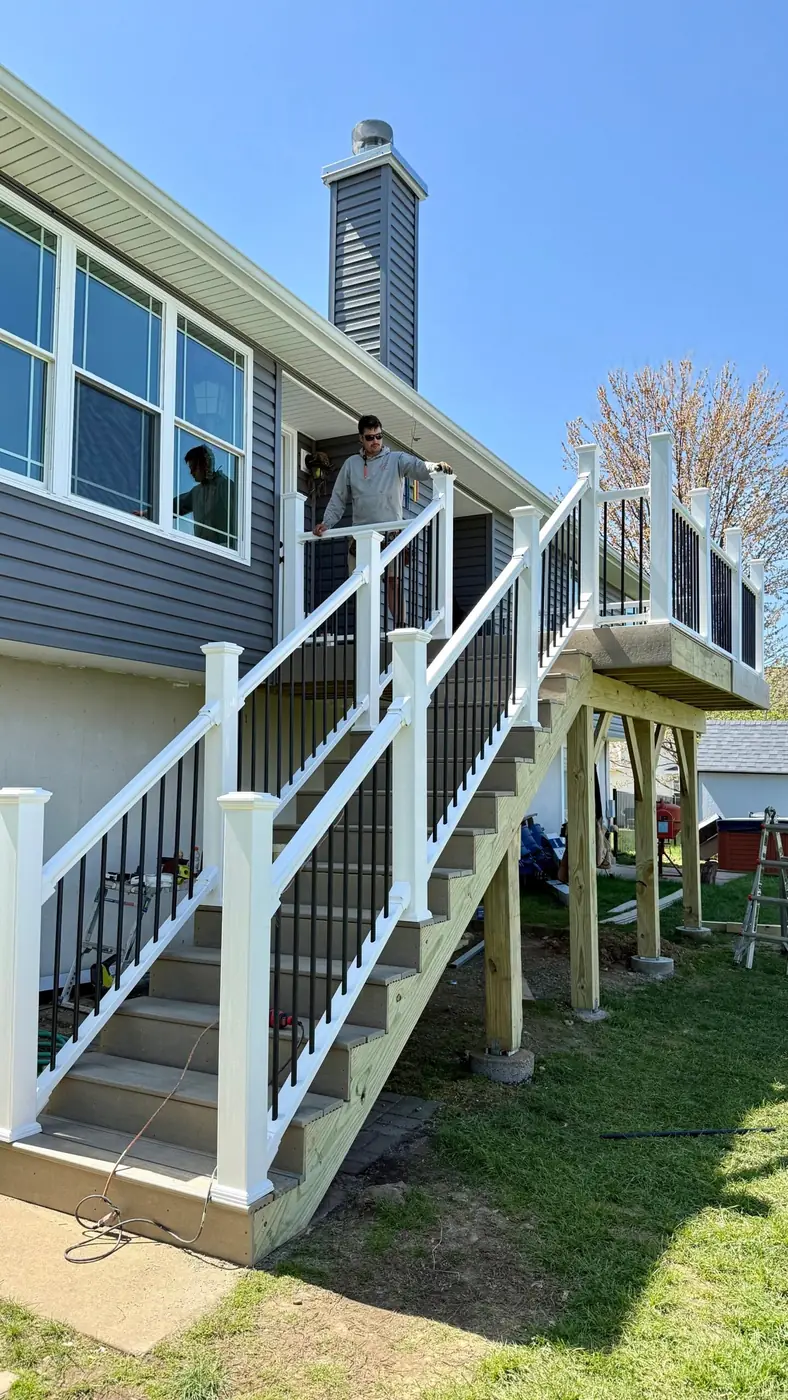
Cedar Decks in O'Fallon, MO: A Homeowner's Guide
Deck builder based in St. Charles, MO, working across St. Charles County.
Why pick cedar over other deck boards?
Most homeowners we meet in O'Fallon are choosing among three things: pressure-treated pine, composite and cedar. Pressure-treated is the cheapest and the most common framing lumber. Composite costs more up front and asks for little more than washing. Cedar sits between them on price and gives you something the other two don't: it's actual wood, with a reddish-brown color, a grain you can see and a smell you notice the day the boards go down.
It's also lighter and easier to cut than many woods, which matters when a design has curves, angled corners or picture-frame borders. Our crew can shape cedar on site without fighting it.
The trade-off is upkeep. Cedar is not a set-it-and-forget-it material, and anyone who tells you otherwise is selling something. If you like the idea of an afternoon with a stain brush every few years, cedar rewards you. If you'd rather never think about the deck boards again, composite is probably the better call, and we'll tell you so.
How does cedar hold up to rot and insects?
Western red cedar gets its reputation from compounds called extractives that build up in the heartwood, the darker inner part of the tree. Wood researchers credit those extractives, mainly thujaplicins and certain phenolics, for the wood's natural resistance to decay. That's why cedar decking can go without the chemical treatment that pine needs.
There are two catches worth knowing:
- Only the heartwood is protected. Sapwood, the paler outer layer, has no special resistance, and some deck boards contain a mix of both.
- Natural durability varies from tree to tree. Researchers note there's no reliable way to predict how durable a given piece of heartwood will be.
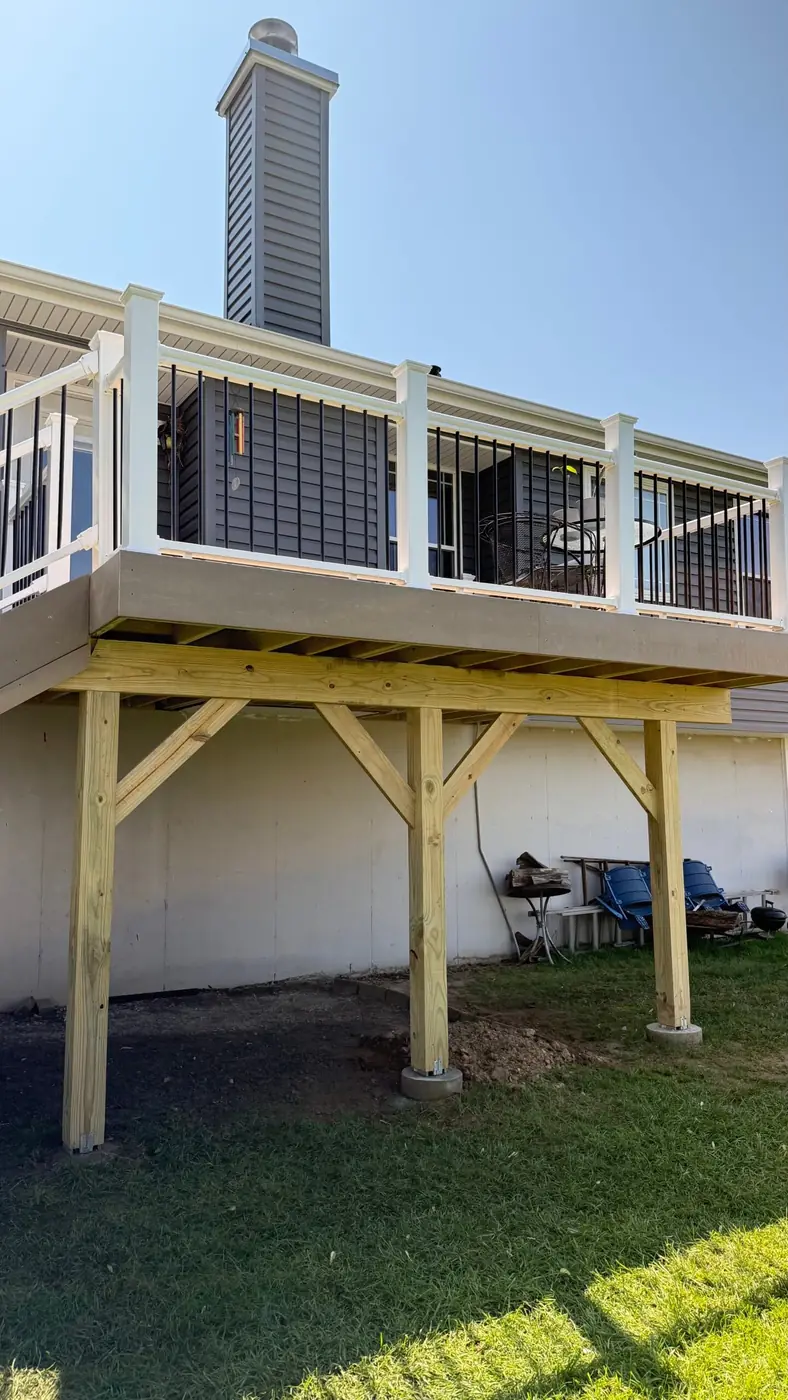
So we treat cedar's rot resistance as a head start, not a guarantee. The framing under a cedar deck is usually pressure-treated lumber rated for ground contact where it needs to be, because posts and joists take more moisture than the boards on top.
What does O'Fallon weather do to a cedar deck?
O'Fallon gets hot, humid summers and winters that swing above and below freezing many times. Both are hard on wood. Sun breaks down the surface fibers and fades the color. Moisture soaks in, freezes, thaws and dries out, and each cycle opens small checks in the board ends and faces.
Left bare, cedar turns gray. The Western Red Cedar Lumber Association points out that in very dry climates it weathers to an even silver, but in most other climates sun and moisture leave it a darker, blotchy gray. Missouri's summer humidity puts us squarely in the second group.
Clay-heavy soil around O'Fallon adds one more thing to plan for. It holds water after storms, so we pay attention to grading and drainage under the deck and keep the area under low decks open enough to dry.
How should you finish and maintain cedar?
Industry groups disagree a little on the default. The lumber association treats a weathered gray deck as a valid low-effort choice. The Western Red Cedar Export Association's finishing guide strongly recommends a protective finish to keep the surface from breaking down. For a deck in our climate, we side with finishing it.
A simple routine that works:
- Let new boards dry before the first coat. Finishing guides recommend wood moisture below 20 percent.
- Use a penetrating semi-transparent stain with UV protection. It soaks in and shows the grain.
- Don't overload it. Too much stain forms a film that peels like paint and has to be stripped later.
- Wash the deck each spring and recoat when the color starts to fade, usually every few years depending on sun exposure.
- Clear leaves and debris from between boards so water can drain.
South- and west-facing decks fade fastest. A deck that sits in afternoon shade from a mature tree can go noticeably longer between coats.
Do you need a permit for a cedar deck in O'Fallon?
Yes. The City of O'Fallon's Building and Code Enforcement Division lists decks among the residential projects that need a permit. The city's deck guide asks for plans and a scaled plot plan or survey showing where the deck will sit on the lot. It also covers setbacks from property lines and easements, and calls for guardrails when the deck surface is more than 30 inches above grade.
Those rules can change, so confirm current requirements and fees with the city before work starts. If your address is in unincorporated St. Charles County rather than inside O'Fallon city limits, the county reviews the project instead. When we build your deck, the crew handles the permit paperwork as part of the job.
What design choices work well with cedar?
Cedar's color is the star, so designs that show off the boards tend to look best. A few ideas we come back to often:
- A picture-frame border, where boards run around the edge and cover the cut ends of the field boards.
- Diagonal or herringbone decking for a larger platform that would look plain with straight runs.
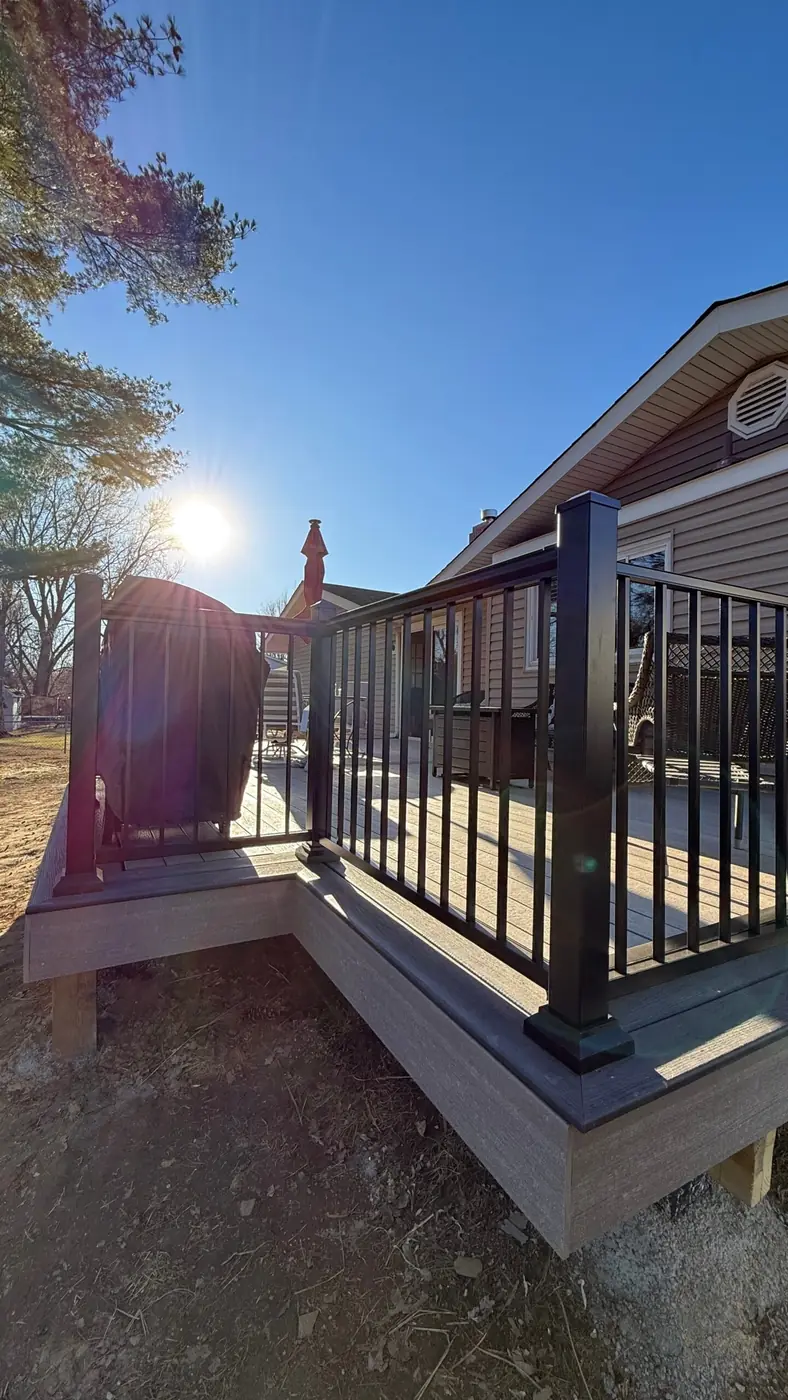
- Cedar railings with aluminum or cable infill if you want a clearer view of the yard.
- A pergola built over part of the deck, which shades the boards and slows fading where people sit.
- Low-voltage deck lighting set into the stair risers or posts.
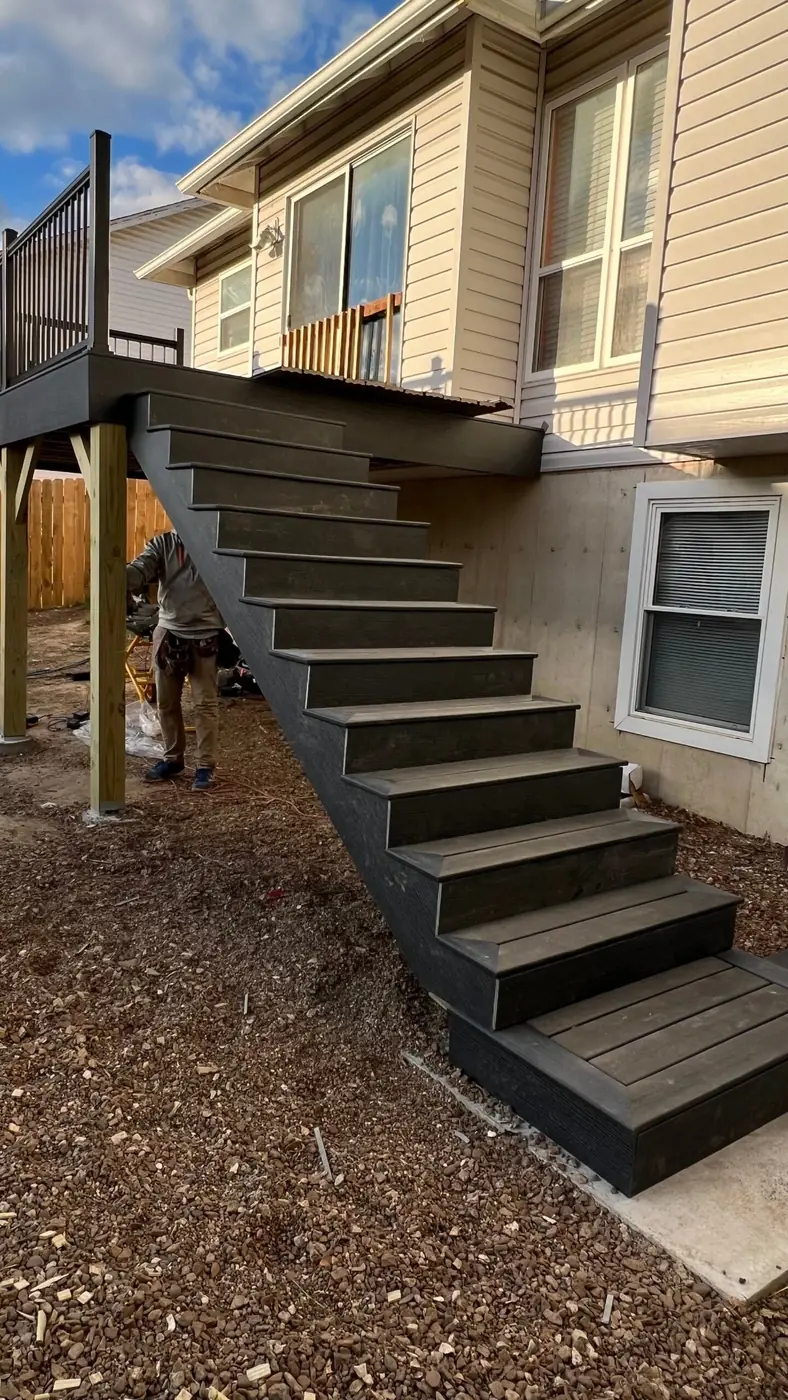
Wide stairs down to the yard work well on the newer, flatter lots common in O'Fallon subdivisions. On sloped lots, a two-level layout keeps each platform closer to the ground and can cut down on how much railing you need.
How does cedar compare on cost and resale?
We don't publish prices because every yard and design is different. National data gives a useful frame. The 2025 Cost vs. Value report from Remodeling and the Journal of Light Construction put the average wood deck addition at $18,263 nationally and estimated it recoups about 95 percent of that at resale. The same report put a composite deck addition at $25,096, recouping about 89 percent.
That report uses a standard deck size and pressure-treated wood, so a cedar deck will land somewhere different. Cedar boards usually cost more than pressure-treated pine and less than most composite lines. Your actual number depends on size, height, the stair and railing plan and how much the site needs prep.
When is cedar the wrong choice?
We'd steer you away from cedar in a few situations:
- The deck sits low and close to damp ground with little airflow.
- It gets full sun all day and you don't want to refinish it.
- You want a deck you can rent out or leave alone for years at a time.
In those cases composite or a capped board is easier to live with. A good consultation should cover this honestly before you sign anything.
Frequently asked questions
How long does a cedar deck last?
It depends on the boards, the finish schedule and how well the deck drains. A cedar deck with mostly heartwood boards, good airflow underneath and a finish renewed every few years can give you many years of service. A neglected deck in a damp, shaded spot will wear out much faster. The framing matters as much as the boards.
Should I stain a new cedar deck right away?
Not on the first day. Let the boards dry so the stain can soak in; finishing guides recommend wood moisture below 20 percent. Depending on the weather, that's often a few weeks after installation. A light cleaning first helps the stain take evenly. Use a penetrating semi-transparent product rather than a thick film-forming one.
Is cedar or composite better for O'Fallon summers?
Both work. Composite needs far less upkeep, but Trex notes its boards can get hot in direct sun, especially darker colors. Cedar keeps a natural wood look and can be refinished, but it needs a stain coat every few years to hold its color in our humidity. Your yard's sun exposure and how much upkeep you want usually decide it.
Can you replace a pressure-treated deck surface with cedar?
Often, yes. If the existing framing is sound, correctly attached to the house and spaced for the new boards, we can install cedar decking and railings on it. If the ledger, joists or posts show rot or weak connections, those get fixed first. We inspect the structure before quoting a resurfacing job.
Does a cedar deck need a permit in O'Fallon?
Yes. The City of O'Fallon lists decks among the residential projects that need a building permit, and its deck guide asks for plans and a plot plan showing the deck's location. Confirm current rules with the city's Building and Code Enforcement Division. We handle the permit as part of the job.
Talk to Supreme Deck Builders in O'Fallon
If you're weighing cedar for your O'Fallon backyard, call Supreme Deck Builders at 314-582-3861 for a free estimate. We're based in St. Charles and build decks across St. Charles County, and we'll walk your yard, talk through cedar against the other options and give you an itemized quote.
Talk to us about your deck
Call 314-582-3861 or send the form and we will set up a free estimate.
Talk to Kyle and the crew
Call or email, or send the form with a few photos of the space.